|
 H A L L O F F A M E C A N D
I D A T E S
H A L L O F F A M E C A N D
I D A T E S
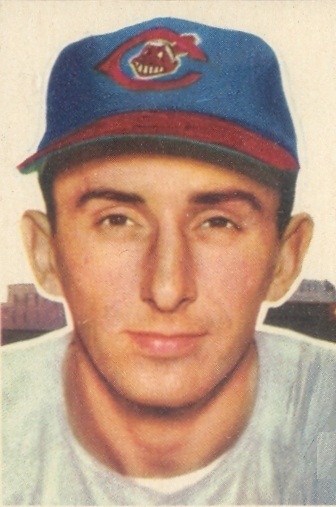 Ray Narleski Ray Narleski
Relief
Pitcher · St. Louis Maroons, Los Angeles Outlaws, Brooklyn
Superbas, Dallas Texans, Boston Federals, Atlanta Hilltoppers,
Washington Monuments ·
1954-1971
Ray Narleski’s legacy is a rare combination of consistency, longevity,
and brilliance. He was rarely a league leader in saves--he had just
three 30-save seasons--but he had at least 10 saves for 17 consecutive
years. And he capped his career with a series of clutch performances
that helped the Washington Monuments win back-to-back pennants and a
league championship.
Camden, N.J. native Ray Narleski was the most effective and consistent
closer in the United League’s first two decades. Drafted in 1954 by the
St. Louis Maroons as the fourth overall pick,
Narleski was part of a rich crop of relief pitchers that included future
bullpen greats Tex Clevenger, Rusty Kemmerer, and Ray Crone. After a
respectable rookie campaign, in which he saved seven games with a solid
3.74 ERA in a setup role, Ray was part of a monster deal in March 1955
that moved three future Hall of Fame Candidates--Roy Campanella, Willie
Jones, and Narleski--to Los Angeles in return for 28-game winner Steve
Gromek and second baseman Danny O’Connell. The second-year Narleski
became the closer for the expansion Outlaws, notching 37 saves, a club
record that stands to this day.
Ray would pitch for Los Angeles for more than 10 years. He saved 127
games in his first four seasons with L.A. and while his save totals
later dipped into the teens, from 1962-64 he had a sub-2.00 ERA for
three straight seasons, spanning 111 appearances. In 1963, he was a key
part of the the club’s first winning season and second place finish,
with a 1.55 ERA and 15 saves, and began a string of six consecutive
All-Star Game selections. In 1964, he posted a 1.64 ERA and 19 saves,
and won selection to the All-UL Team. By the time he left the City of
Angels in the summer of ‘65, he had compiled a total of 244 career saves
and was already well established as one of the three great closers in UL
history, along with Hoyt Wilhelm and Ted Abernathy. But at the age of
36, Narleski’s best seasons were still ahead of him.
After six saves and a 1.96 ERA down the stretch for Brooklyn in 1965,
Narleski became a free agent. He saved 21 games for Dallas in 1966 and
then joined the Boston Federals for a three-year stint in 1967, tallying
48 saves and a 2.52 ERA. On June 19, 1968, he earned his 298th career
save, pushing him past Wilhelm for the all-time record. Turning 40 in
the 1969 offseason, Narleski mulled retirement, but was lured to Atlanta
with a $4.1 million, one-year contract. His 3.99 ERA after 45
appearances was his highest in over a decade, signalling that his career
was on the downward slope. Hoping to salvage any remaining trade value,
the Hilltoppers unloaded him to Washington on July 20 for a pair of high
draft picks. Narleski then turned in one of the finest performances by
a closer in UL history, saving 14 games with a 1.14 ERA in the last two
months of the season, and helping the Monuments catch up to Detroit. He
saved four of the Monuments six must-win games, including the one-game
tiebreaker with the Griffins on Sept. 30 that clinched the East Division
title, and Games 6 and 7 of the World Series, as the Mons rallied from
3-1 down to topple Chicago. His three World Series saves, all on the
road, established a UL record and made him the first relief pitcher to
win the World Series MVP.
Narleski was a key factor again in the Monuments’ 1971 pennant hunt, and
his 27 saves were his most in a decade. He posted a 1.38 ERA in his
last 11 appearances, did not allow a run in five games after Sept. 16,
and was again on the mound in the ninth inning on Sept. 30 as the
Monuments again clinched the division on the last day of the season. He
finished his career with a league-record 371 saves and firmly
established credentials as the greatest closer in UL history.
(TJS)
AWARDS & ACCOLADES
World Series MVP (1970)
All-UL Team (1964)
|
