|
 H A L L O F F A M E I N D U
C T E E S
H A L L O F F A M E I N D U
C T E E S
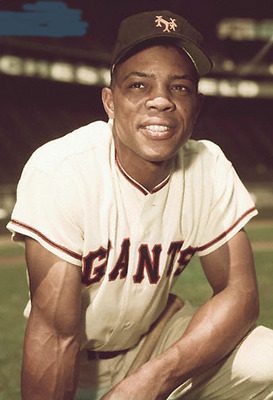 Willie Mays ·
Elected 1972 Willie Mays ·
Elected 1972
Center Fielder,
Washington Monuments, St. Louis Maroons ·
1951-1970
Willie Howard Mays, Jr. is regarded by many as the best player in
baseball history. Quite literally the man for whom the phrase
"five-tool player" was invented, Mays wowed those who saw him play
as a teenager for the Birmingham Black Barons. The Giants scout who
signed him was famously sent to look at another player on the team,
but ultimately sent back a report that made no reference to the
player in question, writing instead that Mays was "the best young
player I've ever seen." Indeed, Roy Campanella--who played against
the young Mays while on a barnstorming tour of the South--reportedly
begged the Dodgers to sign the then-18-year-old prodigy. No
surprise, then, that a 20-year old Mays should be the first overall
selection in the inaugural draft of the United League of fake
American Baseball Clubs. Think on that for a second. Mantle, Campy,
Jackie, Ted Effin' Williams, Spahn, Musial, Doby, and every other
player your care to name from that golden generation, all took a
backseat to the great Mays in UL terms. And so it was that the
cornerstone of the league's first great dynasty was laid.
Mays, like fellow rookie uber-prospect Mickey Mantle, entered the
league as a teenager, and as a result he took a couple seasons to
reach his peak. But even as an unpolished talent, Mays put up
respectable numbers: in 1951 he hit 15 home runs and drove in
68 runs, and in 1952 he hit .300 and drove in 71 to help the
Monuments win their first UL crown. In 1953 Mays began a run
of 14 seasons with at least 20 home runs, helping the Mons to a
second title. By 1954, Mays was the Monuments top hitter, and
in 1955 he emerged as an MVP candidate, hitting .310-36-106.
Three years later, Mays put up a monster year, establishing career
highs .325 with 45 home runs and 133 RBI and winning MVP honors.
Mays had 10 seasons with at least 30 home runs and six 100-RBI
seasons, including 1965 and 1966. After the '66 season, Mays
had 484 home runs, was coming off a 32-homer season, and was just
34. All indicators pointed to an easy trajectory to 500 career
home runs, but Mays never made it. Starting in spring 1967,
Mays suffered a serious of injuries that, along with AAA rehab
assignments, kept him out of regular UL action for the next three
seasons. His UL average after 1966 was just .230 and he hit
only seven home runs in 348 at bats.
Mays had power and could
hit for average, but speed and defense defined his game every bit as
much as his hitting. Mays swiped 29 bases in 30 attempts in
his rookie year, stole 20 or more bases in 15 of his first 16
seasons, and his 657 career steals ranks second only to Lou brock on
the all-time list. Mays won the first UL Gold Glove for center
field and went on to win a total of four, more than any other center
fielder.
Mays ended his illustrious career in 1970 one game
shy of 2500 career games, but surpassed a number of stratospheric
milestones. He is one of rfour players with 9,000 at bats, one
of six players with 2500 hits, 2nd all-time in RBIs and stolen
bases, 4th in home runs and runs, and 7th in hits.
Mays was
not only the league's first player, but its best player, the best
player on the best team, six-time All-ULer, and centerfielder on the
All-Decade Team. Ultimately, Mickey Mantle or Joe Torre may
eclipse the great Mays as the player with the strongest claim to be
the greatest in league history. But Mays' legacy as the UL's
first superstar and the literal foundation of the the young league
will never be surpassed. (Glen Reed/TJS)
AWARDS &
ACCOLADES
All-Decade Team (1951-60)
Most Valuable Player (1958)
All-UL Team (1955, 1956, 1957, 1958, 1959, 1961)
Gold Glove Award
(1951, 1953, 1955, 1957)
Home Run Champion (1957, 1962)
RBI
Champion (1958, 1966), OPS Champion (1958)
8-time Batter of the
Month, 11-time Player of the Week
|
Career Batting
Stats
|
| |
Age
|
G
|
AB
|
H
|
2B
|
3B
|
HR
|
RBI
|
R
|
BB
|
K
|
SB
|
CS
|
AVG
|
OBP
|
SLG
|
OPS
|
RC
|
|
1951 Washington |
19
|
148
|
531
|
132
|
30
|
7
|
15
|
68
|
80
|
64
|
73
|
29
|
1
|
.249
|
.329
|
.416
|
.746
|
79.0
|
|
1952 Washington |
20
|
114
|
453
|
136
|
21
|
8
|
16
|
71
|
83
|
35
|
68
|
32
|
5
|
.300
|
.350
|
.488
|
.838
|
78.8
|
|
1953 Washington |
21
|
147
|
516
|
129
|
20
|
8
|
21
|
79
|
86
|
67
|
82
|
32
|
6
|
.250
|
.336
|
.442
|
.778
|
81.0
|
|
1954 Washington |
22
|
140
|
537
|
156
|
16
|
20
|
24
|
97
|
98
|
55
|
103
|
36
|
13
|
.291
|
.356
|
.529
|
.885
|
100.0
|
|
1955 Washington |
23
|
140
|
513
|
159
|
32
|
13
|
36
|
106
|
108
|
52
|
74
|
19
|
7
|
.310
|
.373
|
.634
|
1.007
|
121.7
|
|
1956 Washington |
24
|
147
|
525
|
145
|
17
|
7
|
35
|
96
|
100
|
56
|
75
|
24
|
10
|
.276
|
.346
|
.535
|
.881
|
97.2
|
|
1957 Washington |
25
|
148
|
523
|
163
|
18
|
7
|
33
|
90
|
112
|
65
|
76
|
44
|
13
|
.312
|
.388
|
.562
|
.950
|
113.5
|
|
1958 Washington |
26
|
148
|
585
|
190
|
34
|
9
|
45
|
133
|
122
|
65
|
95
|
50
|
19
|
.325
|
.392
|
.644
|
1.037
|
141.6
|
|
1959 Washington |
27
|
140
|
510
|
138
|
25
|
9
|
31
|
87
|
93
|
67
|
74
|
49
|
19
|
.271
|
.355
|
.537
|
.892
|
95.1
|
|
1960 Washington |
28
|
150
|
557
|
148
|
32
|
7
|
32
|
81
|
90
|
75
|
112
|
58
|
22
|
.266
|
.351
|
.521
|
.872
|
99.4
|
|
1961 Washington |
29
|
150
|
567
|
161
|
31
|
8
|
37
|
101
|
102
|
72
|
108
|
51
|
10
|
.284
|
.366
|
.563
|
.929
|
121.7
|
|
1962 Washington |
30
|
156
|
584
|
161
|
29
|
2
|
43
|
119
|
108
|
81
|
99
|
52
|
17
|
.276
|
.362
|
.553
|
.915
|
117.9
|
|
1963 Washington |
31
|
152
|
570
|
152
|
18
|
5
|
28
|
89
|
96
|
105
|
80
|
48
|
29
|
.267
|
.380
|
.463
|
.843
|
94.3
|
|
1964 Washington |
32
|
157
|
576
|
153
|
34
|
12
|
24
|
92
|
102
|
97
|
77
|
52
|
32
|
.266
|
.371
|
.491
|
.862
|
95.7
|
|
1965 Washington |
33
|
125
|
500
|
137
|
21
|
6
|
32
|
112
|
78
|
51
|
64
|
29
|
21
|
.274
|
.338
|
.532
|
.870
|
80.4
|
|
1966 Washington |
34
|
151
|
609
|
179
|
33
|
8
|
32
|
139
|
117
|
80
|
65
|
37
|
17
|
.294
|
.369
|
.532
|
.901
|
116.7
|
|
1967 Washington |
35
|
27
|
107
|
34
|
11
|
1
|
5
|
24
|
14
|
12
|
7
|
7
|
2
|
.318
|
.387
|
.579
|
.966
|
22.4
|
|
1968 Washington |
36
|
123
|
205
|
38
|
10
|
1
|
2
|
13
|
30
|
16
|
39
|
6
|
4
|
.185
|
.244
|
.273
|
.518
|
13.9
|
|
1970 St. Louis |
38
|
36
|
35
|
8
|
1
|
1
|
1
|
4
|
14
|
2
|
5
|
2
|
3
|
.229
|
.270
|
.400
|
.670
|
2.4
|
| Total UL |
|
2499
|
9003
|
2519
|
433
|
139
|
492
|
1601
|
1633
|
1117
|
1376
|
657
|
250
|
.280
|
.358
|
.523
|
.881
|
1739.9
|
|
